


Bespoke Luxury Wardrobe Care Training

Protect Valuable Garments from Damage, Loss and Improper Care
Our expert visits your property, assesses the performance of household staff and demonstrates safe care techniques using your garments, equipment and established household processes.
This is not a standard course. It is a bespoke wardrobe care system tailored to your collection, your family’s preferences and the required level of service.
1–5 days · For one employee or an entire team · UAE and international locations · Strict confidentiality

A Wardrobe That Operates as a System
Even experienced household staff can make mistakes when requirements are communicated verbally, responsibilities are unclear and employees follow different care methods.
The cost of such mistakes can be significant: garments may shrink, lose their shape, colour or texture, develop creases or shine, suffer damage during stain removal, or be misplaced when transferred between the laundry room, dressing room and dry cleaner.
On-site training is recommended when:
- damage after washing, drying or ironing occurs repeatedly;
- items are misplaced or returned from the laundry room in an unacceptable condition;
- employees use inconsistent care methods;
- staff are not confident handling delicate materials safely;
- difficult stains are treated without understanding the possible consequences;
- there is no system for tracking garments or monitoring dry-cleaning providers;
- areas of responsibility are not clearly defined;
- employees conceal mistakes or do not know how to report incidents;
- the household manager cannot objectively assess the team’s competence;
- a new employee needs to learn the standards of the household quickly.
One mistake involving cashmere, silk, fur, leather, a complex designer garment or a collector’s item can cost more than professional training.
The project transforms wardrobe care from a collection of separate tasks into a controlled system with consistent procedures, clear accountability and measurable results.
Training Takes Place at Your Property
The trainer visits your apartment, private home, residence, villa, yacht or another property.
The programme is tailored to:
- the composition and specific requirements of the wardrobe;
- the family’s preferences and expectations;
- the organisation of dressing rooms and laundry facilities;
- available equipment, tools and products;
- the number of employees and allocation of duties;
- previous incidents and recurring mistakes;
- the required standard of service.
Staff perform their usual duties in real working conditions. The expert observes their actions, identifies unsafe methods and corrects mistakes immediately.
Recommendations are developed specifically for your property and team rather than for a theoretical wardrobe.

How an On-Site Project Differs from a Standard Course
A group course provides essential professional knowledge. On-site training addresses the specific requirements of an individual household.
The trainer works with your wardrobe, equipment, products, employees and current procedures. The client receives not only training but also a risk assessment, practical correction of mistakes, equipment recommendations and ongoing management tools.
This allows new techniques to be incorporated into daily operations immediately and prevents employees from returning to outdated practices after completing a course.


What the Principal and Household Manager Receive
The Principal Receives
- reduced risk of damage to or loss of valuable garments;
- consistent quality of care across all shifts;
- preservation of each item’s shape, colour, texture and functional properties;
- less need for personal supervision of household staff;
- timely reporting of mistakes and damage;
- clear procedures for handling difficult stains;
- transparent interaction between household staff and dry-cleaning providers.
The Household Manager Receives
- an independent assessment of employee competence;
- consistent techniques and operating standards;
- clear allocation of duties;
- tools for tracking garments and controlling quality;
- recommendations for equipping dressing rooms and laundry facilities;
- a corrective action plan;
- a foundation for onboarding new employees.
How the Project Works
1. Confidential Consultation
We discuss the household team, wardrobe composition, current challenges, previous incidents, the principal’s expectations and the household manager’s objectives.
2. Property Assessment
The expert assesses dressing rooms, laundry facilities, equipment, tools, care products and the staff’s actual working methods.
The assessment covers sorting, washing, drying, ironing, stain removal, storage, garment transfers and handover to external service providers.
3. Bespoke Programme
We identify priorities and include only relevant subjects. Most training time is dedicated to procedures that present the greatest risk to valuable property and service quality.
4. Practical Training
Employees perform their usual duties under the trainer’s supervision. Mistakes are reviewed and corrected during the work itself.
5. Staff Assessment
Depending on the selected format, we assess professional knowledge, accuracy, discipline, ability to learn, accountability, response to feedback and capacity to follow established procedures.
6. Recommendations and Implementation Plan
The client receives independent conclusions regarding staff, procedures, equipment and recommended next steps.
Bespoke Training Programme
The programme content and duration are determined following the consultation and initial assessment.
1. Luxury Wardrobe Care Standards
- professional ethics and confidentiality;
- respect for personal boundaries;
- understanding the principal’s requirements;
- precision and attention to detail;
- organisation of the working day;
- communication with the household manager and team;
- accountability for results;
- timely reporting of mistakes and damage;
- working with standards, checklists and logs.
2. Organisation of Dressing Rooms and Laundry Facilities
The trainer assesses equipment, storage systems, lighting, ventilation, hangers, organisers, tools and care products.
Staff learn:
- front-facing and side-facing hanging arrangements;
- horizontal garment presentation;
- garment sorting;
- selection of appropriate hangers and protective covers;
- maintaining the dressing room to luxury-boutique standards;
- organisation of work areas;
- safe storage of care products;
- correct use and maintenance of laundry equipment.
3. Garment Organisation and Inventory Control
- receiving, sorting and returning garments to their designated places;
- creating and maintaining a digital wardrobe catalogue;
- garment labelling and identification;
- recording garment condition;
- tracking transfers between dressing rooms and laundry facilities;
- preparing and handing garments over to dry cleaners;
- recording damage and other incidents;
- handover of garments and information between shifts.
4. Washing and Garment Care
Staff learn to interpret care labels, sort garments and select appropriate programmes, temperatures, products and treatment methods.
The practical programme may include:
- washing white, coloured and dark garments;
- care of cashmere, wool, silk and fine knitwear;
- care of technical membrane fabrics and down-filled garments;
- care of velvet and corduroy;
- washing lingerie, hosiery and other delicate items;
- tie care;
- hand washing, rinsing, water extraction and drying;
- starching;
- removing pet hair, lint and pilling;
- preventing shrinkage, deformation, shine and colour loss;
- care of bed linen, table linen and other household textiles.
The principal objective is to preserve the garment’s shape, colour, texture and functional properties.
5. Drying, Ironing and Finishing
The trainer demonstrates correct drying, ironing and finishing methods for ladies’ and gentlemen’s wardrobes.
Depending on the equipment available at the property, the programme may include:
- working with Laurastar and Trevil ironing systems;
- using vacuum and air-blowing functions;
- working with steam form finishers;
- using rotary ironing equipment;
- selecting the correct temperature and steam intensity;
- using specialist ironing accessories;
- preventing shine, deformation and iron marks;
- finishing garments with complex construction.
6. Stain Removal and Professional Cleaning
Staff learn the safest sequence of actions when a stain is discovered and understand the limits of in-house treatment.
The programme may include:
- identifying the origin of a stain;
- initially assessing the garment’s composition and condition;
- cold and hot stain removal;
- preliminary and final spotting;
- selecting products and the correct treatment sequence;
- the principles of dry cleaning and professional wet cleaning;
- preparing an item for specialist treatment;
- recording its condition before and after professional cleaning.
The principal rule is not to experiment with a valuable item, but to make a technically informed decision.
7. Care of Footwear, Bags and Accessories
- care of smooth leather;
- care of suede and nubuck;
- cleaning textile and sports footwear;
- care of bags and accessories;
- preventing deformation and drying of leather;
- selecting appropriate products and brushes;
- preparing footwear for seasonal storage.
8. Care of Fur and Leather Garments
The trainer explains the requirements for storing, airing and safely handling fur and leather garments and helps staff identify situations requiring a specialist service provider.
9. Seasonal Storage
Staff learn to:
- inspect garments before storage;
- arrange professional cleaning and preparation;
- select appropriate packaging and protective materials;
- prevent deformation, odours and damage;
- follow correct placement and storage requirements;
- safely return seasonal wardrobes to use.
10. Packing and Unpacking Luggage
Employees learn professional packing methods for garments, footwear and accessories, efficient use of space, outfit preparation and techniques to prevent creasing and deformation.
11. Monitoring Dry Cleaners and Other Service Providers
Where required, procedures are established for:
- preparing garments for handover;
- recording condition and included components;
- documenting treatment requirements;
- tracking handed-over items;
- receiving and inspecting completed work;
- recording damage and claims.
Project Deliverables
Depending on the selected format, the client receives:
- a luxury wardrobe risk assessment;
- bespoke practical training;
- a list of critical mistakes;
- an assessment of employees’ knowledge, skills and ability to learn;
- recommendations regarding products, tools and equipment;
- recommendations for organising dressing rooms and laundry facilities;
- a report on each participant;
- a corrective action plan;
- recommendations for allocating responsibilities;
- forms for tracking, transferring and handing over garments;
- a procedure for recording damage and other incidents;
- recommendations for working with dry cleaners and other service providers.
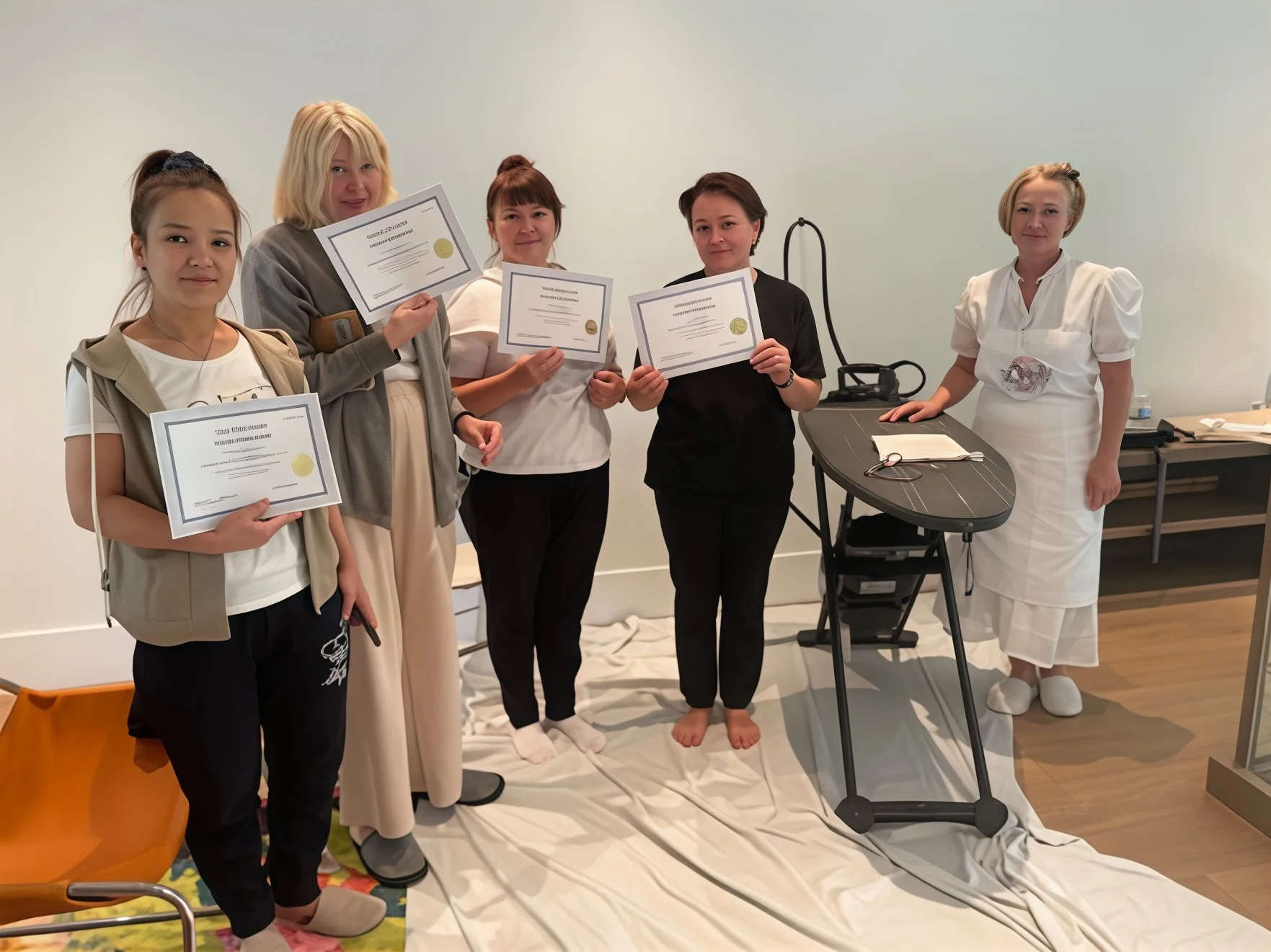
Each participant receives a personalised certificate, a practical luxury wardrobe care guide and 30-day access to a specialist online course for knowledge reinforcement.
Management Control Tools
On-site training can be supplemented with the development of a complete management framework:
- standard operating procedures;
- quality-control checklists;
- a responsibility matrix;
- a garment movement log;
- a damage and incident log;
- a shift handover form;
- rules for working with external service providers;
- an incident-escalation procedure;
- onboarding materials for new employees.
We do not replace the household manager or assess their performance in front of the team. Our role is to provide independent professional tools that strengthen discipline and make results measurable.
Train, Limit Responsibilities or Replace?
If an employee is reliable, loyal and well suited to the family, professional training is often more effective than recruiting a replacement.
The assessment helps determine whether the employee:
- meets the requirements;
- can achieve the required standard after training;
- requires additional practice or supervision;
- can safely perform a limited range of duties;
- does not demonstrate the required ability to learn or level of accountability.
The client receives a neutral professional recommendation: develop the employee, adjust their responsibilities, strengthen supervision or consider replacement.
The final staffing decision always remains with the client.
Service Formats
Training
Suitable when the objective is to identify key risks and improve the performance of one employee or an entire team.
Includes:
- an assessment of dressing rooms, laundry facilities and procedures;
- a bespoke programme;
- practical training;
- analysis of critical mistakes;
- recommendations regarding products, tools and equipment;
- training materials for participants.
Control
Suitable when the objective is to train employees, assess the team and strengthen management control.
Includes everything in the Training format, plus:
- employee assessment;
- a working session with the household manager;
- recommendations for allocating responsibilities;
- a corrective action plan;
- a confidential client report;
- a follow-up assessment after 30–45 days.
System
Suitable for comprehensive improvement of wardrobe care operations and implementation of consistent standards.
Includes everything in the Control format, plus:
- development of standard operating procedures;
- checklists and logs;
- a responsibility matrix;
- garment transfer and inventory rules;
- procedures for recording damage and incidents;
- rules for working with external service providers;
- onboarding materials for new employees;
- implementation support.
The final fee depends on the size and composition of the wardrobe, number of employees, current condition of procedures, project duration and property location. Transport, visa, travel and accommodation expenses are calculated separately.
Duration
Practical training lasts from one to five days, with eight training hours per day.
For large residences, multiple dressing rooms, several shifts or comprehensive implementation of standards, the duration may be extended. The optimum format is determined after a confidential consultation.
The trainer and agency director may attend the property. The trainer is responsible for assessment and practical instruction, while the director ensures that the project reflects the client’s objectives and evaluates the organisation of the team’s work.
The Expert
The trainer is a specialist in professional garment and household-textile care, combining the expertise of a dry-cleaning technologist and a bespoke tailor and pattern cutter.
She has 15 years of experience in private residences exceeding 4,000 square metres, eight years in the dry-cleaning and laundry departments of The Ritz-Carlton Moscow and Lotte Hotel Moscow, and seven years as a tailor and pattern cutter.
She trained with technologists from South Korea and the United States, as well as tailors and specialist shoe-polishing professionals from Italy.
She currently works in a private residence equipped with its own professional dry-cleaning facility.
Areas of Expertise:
- stain removal and professional wet cleaning;
- care of delicate fabrics;
- fur and leather care;
- professional ironing and finishing;
- seasonal storage;
- organisation of dressing rooms and laundry facilities;
- quality control of household staff and external service providers.
Follow-Up Assessment After 30–45 Days
A follow-up visit determines whether the new standards have become part of daily operations.
The expert reviews:
- implementation of recommendations;
- compliance with approved procedures;
- use of checklists and logs;
- garment tracking and handover;
- allocation of responsibilities;
- the quality of interaction with dry cleaners;
- recurring mistakes and incidents;
- the effectiveness of management control.
The client receives a comparative analysis, an updated risk map, conclusions regarding employees and an action plan for the following 30–90 days.
The follow-up assessment is included in the Control and System formats. It can be commissioned separately for the Training format.
Locations and Confidentiality
The agency provides on-site training throughout the UAE and at international locations.
The project can take place in an apartment, private home, residence, villa, yacht or another client property. Travel arrangements are agreed individually.
All information concerning the family, household staff, routines, property, wardrobe and assets remains strictly confidential. Assessment results are shared only with the client or an authorised representative and are not discussed in front of the team.
An NDA can be signed upon request.
Request a Preliminary Project Plan
Tell us about the wardrobe, household team and recurring issues. We will clarify your objectives and recommend the appropriate duration, programme and service format.
We preserve the value of your wardrobe, strengthen staff performance and create a system that works without your constant involvement.
We will respond during business hours and prepare a no-obligation proposal. All information regarding the property, family, wardrobe and household staff remains confidential.